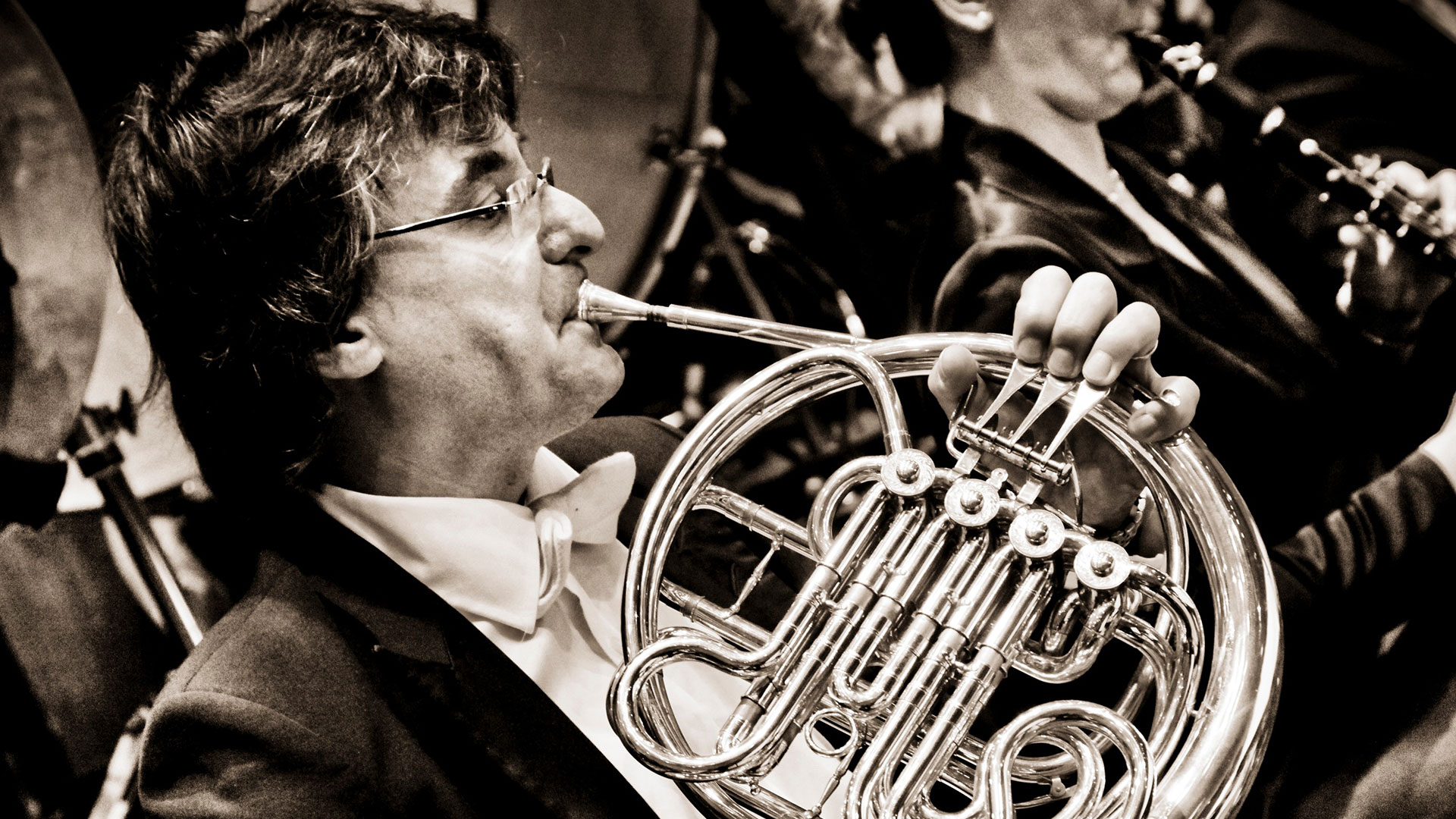
The Grange Festival is an impressive location to mark your final performance as a member of the Orchestra. Is it coincidence that you’ll conclude your tenure there?
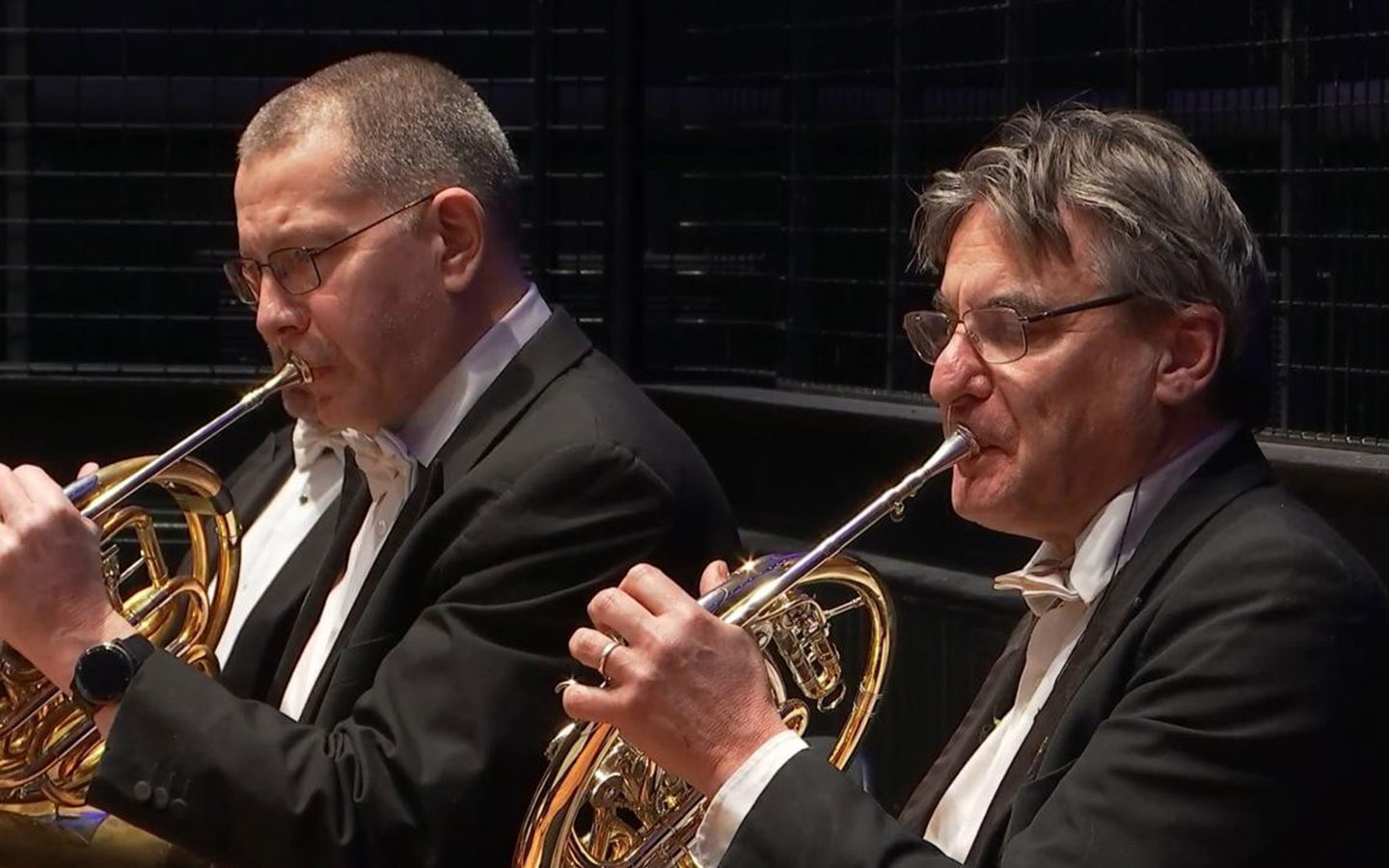
I’m very accustomed to colleagues choosing high profile concerts in world famous halls for their last concert. That’s not for me! I’ll be sitting right at the back of the pit playing Eugene Onegin next to the BSO Fourth Horn – Kevin Pritchard – who I’ve been lucky enough to sit next to for 29 years. He’s such an amazing musician. We’re under the stage so can’t see anything of the action on stage and don’t hear much of it either. It’s not glamorous but I thoroughly enjoy being a part of a large production in an idyllic location.
You grew up as a member of Hampshire County Youth Orchestra (HCYO) – in a golden era, with former BSO violinist Karen Leach, and the late viola player Roger Tapping (a member of the Takács Quartet). Was the BSO part of your early musical story? Did you study with any former BSO/Sinfonietta players?
Hampshire County Youth Orchestra was without doubt the best part of my teenage school years. Many members of the HCYO have gone on to have wonderful careers in music, quite a few have been members of the BSO over the years. I was taught and coached by the lovely horn players (Peter Kane and Chris Hortin) of the Bournemouth Sinfonietta who offered so much encouragement and help. My first introduction to the BSO happened when the HCYO came to an 11am New Year’s Day concert in 1976 in the Winter Gardens to celebrate the Bicentenary of the USA. It made a huge impression. Six years later and quite unexpectedly I became a member of the BSO.
Do you recall the programme that you first played with the BSO?
Oh yes. It was Beethoven’s 3rd Symphony, the Eroica, in Exeter. George Hurst was conducting. On the rehearsal day the sun was shining so he decided to finish the rehearsal at lunchtime, not 5pm. That was a very popular move with the orchestra. All three horn parts are terrific fun to play and there’s the famous trio for horns in the third movement. George gave the horns several stand ups at the end of the show so I can only assume I played ok.
Where were you ahead of joining the Orchestra?
I did science at school. The advice I was given at the time was to not to pursue a career in music as the hours are long, you’re out evenings and weekends and you’ll never be rich. Wise words. So… I studied engineering at Imperial College but then made the move next door to the Royal College of Music so I guess I ignored the advice.
While it’s perhaps hard to pick just one or two key highlights out of a lifetime at the BSO, are there any that you’d like to mention here?
Others might pick out a specific concert but for me my highlights are meeting my wife Jags (who plays in the first violins) and listening to the incredible musicianship of my colleagues on a day-to-day basis and, of course, enjoying the camaraderie. We do spend quite a few hours together travelling or killing time between rehearsals and concerts.
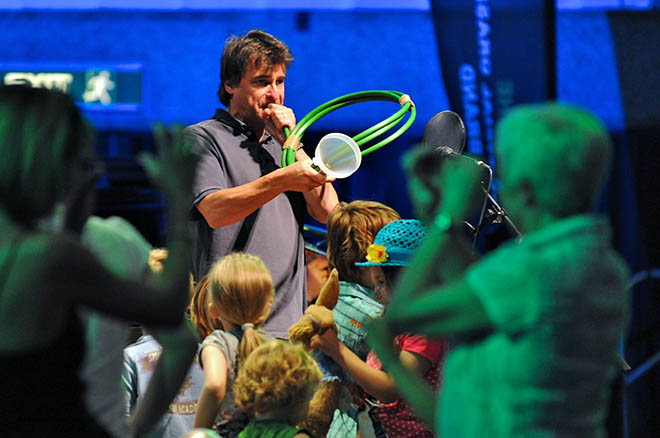
You have a remarkable reputation as a wonderful teacher here in the South West. What does it mean to you to continue in that role?
Well, that’s very kind and flattering! All I try to do as a teacher is to emulate my teachers and coaches from when I was learning and aim to enthuse my pupils with a love of playing the French Horn.
Thank you, Bomber, for your wonderful music-making across the decades. You have made a terrific impact both on the stage and beyond.