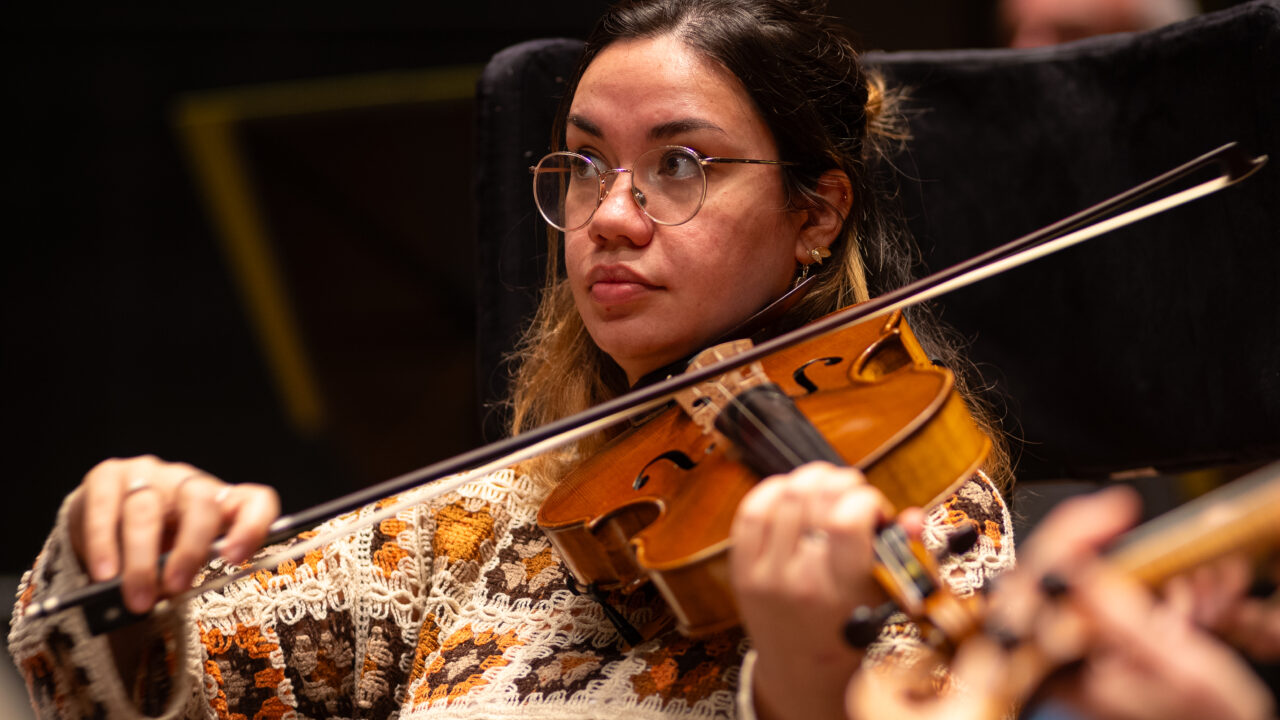
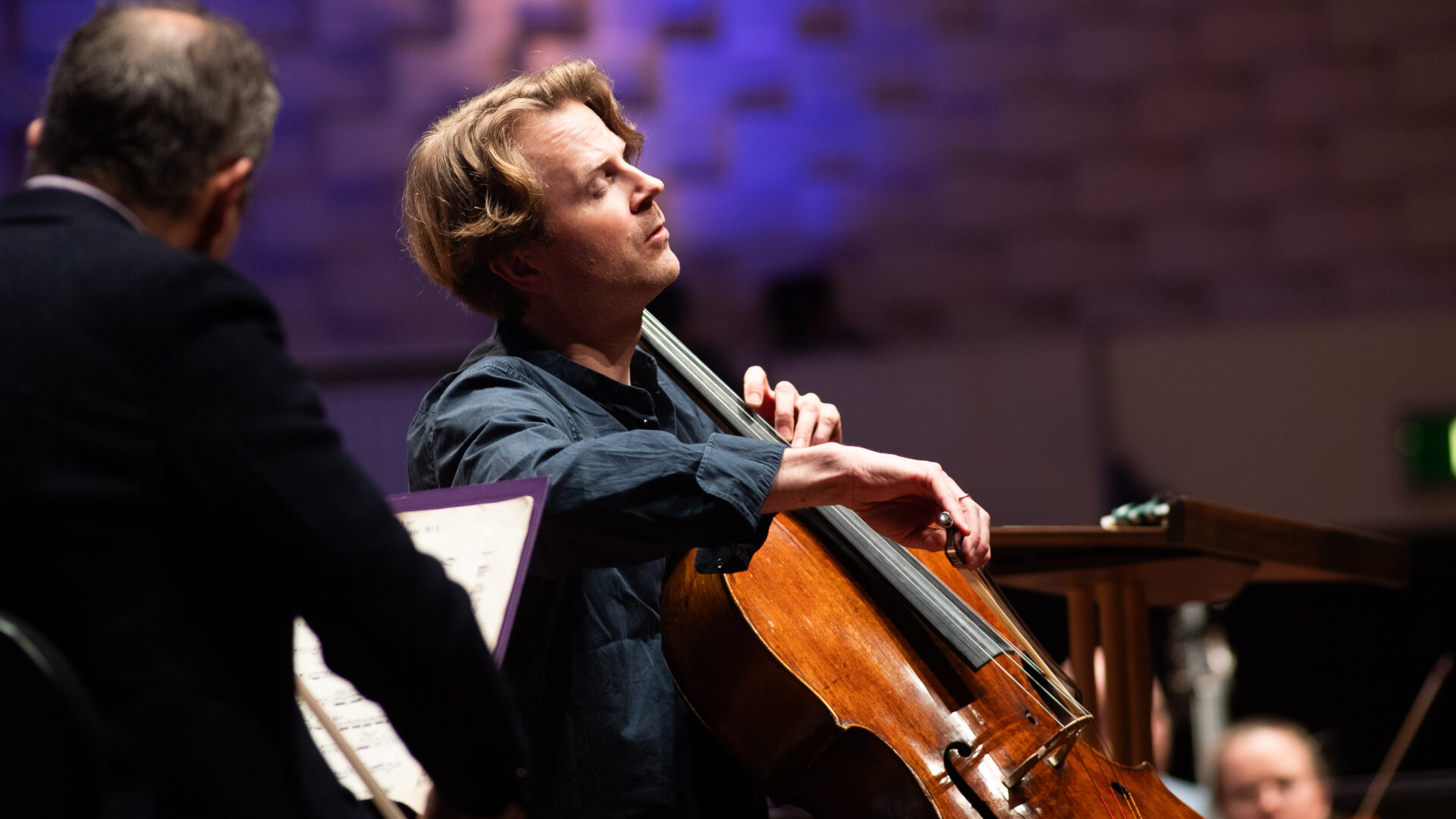
A shrewdly contrasted pairing of works teeming with profligate compositional genius. Haydn’s Cello Concerto No.2 and Mahler’s Symphony No.5 both share a focus on pushing the boundaries of busy contrapuntal energy, while also harbouring a core of peace and contentment at the heart of their respective journeys.
Soloist Julian Steckel intuitively bowed into Haydn’s chameleon changes of style and direction with honeyed tone and quicksilver virtuosity. Synergy with the orchestra was teasingly playful, especially in the outer movements, but with ample contrasting space and pungent lyricism in the central movement. With Haydn at his best, always expect the unexpected – this multi-directional life-enhancing performance delivered the surprises in spades.
After a bucolic finale, Julian Steckel’s encore of Bach’s Sarabande in G from his Cello Suite No.1 also required guesswork as to where the journey might end. His ever-sinuously eloquent lines of solitary and contemplative peace held the audience rapt throughout.
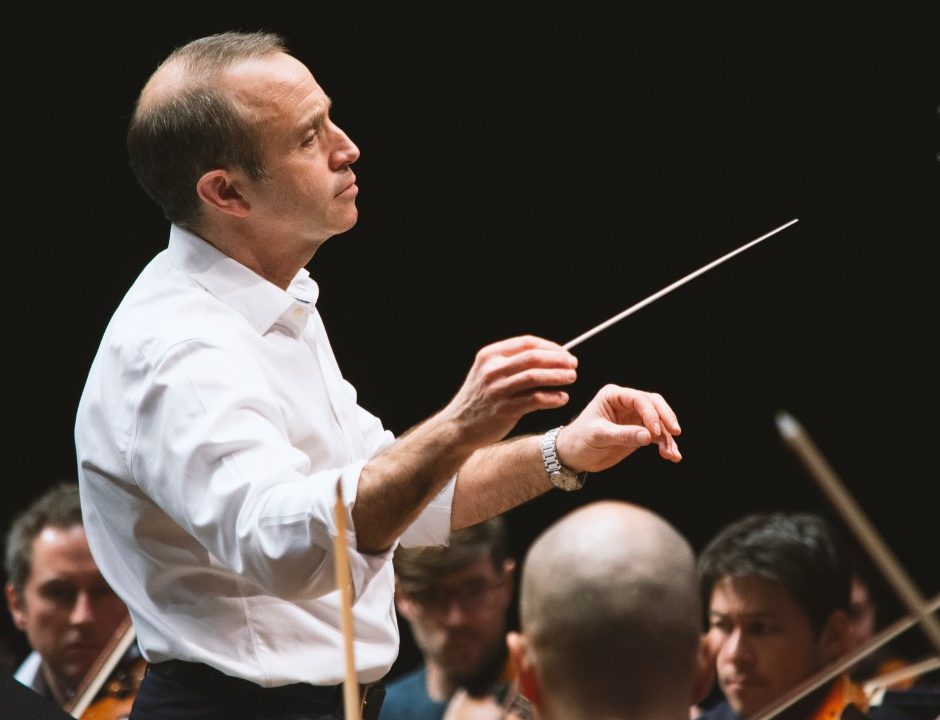
Back in 2022, BSO and Kirill Karabits in Lighthouse gave one of the most overwhelming performances of Mahler 5 that vied with a legendary 1987 Prom performance with Bernstein and the Vienna Philharmonic and a 1991 Prom with Claudio Abbado conducting the Gustav Mahler Youth Orchestra. Although this latest BSO performance with Karl-Heinz Steffens may not have quite reached those exalted levels, it was a close-run salutary and compelling experience in outstanding Mahlerian performance.
All too readily this symphony can turn into an exhausting concerto for orchestra, playing to the gallery with the audience desperate to reach the Adagietto for a breather before the victory finale. Thankfully not in this grittily sculpted performance full of interpretative insight and rare coherence. Mahler’s wishful semi-autobiographical journey from death back to life never descended into any grandstanding or self-indulgence.
Yes, there may have been the occasional orchestral blip, but the comprehensively compelling overview into the composer’s beating heart totally vindicated the unique power of live performance in the same adrenal way as those memorable concerts cited above. Invidious to list every solo BSO stand-out when there were so many, but special honours have to go to principal horn Eleanor Blakeney, who was spectacularly first woman standing in the third movement obbligato.
Long live Live Music!
Critic Ian Julier