Tell us more about Medical Humanities Day, what does it involve?
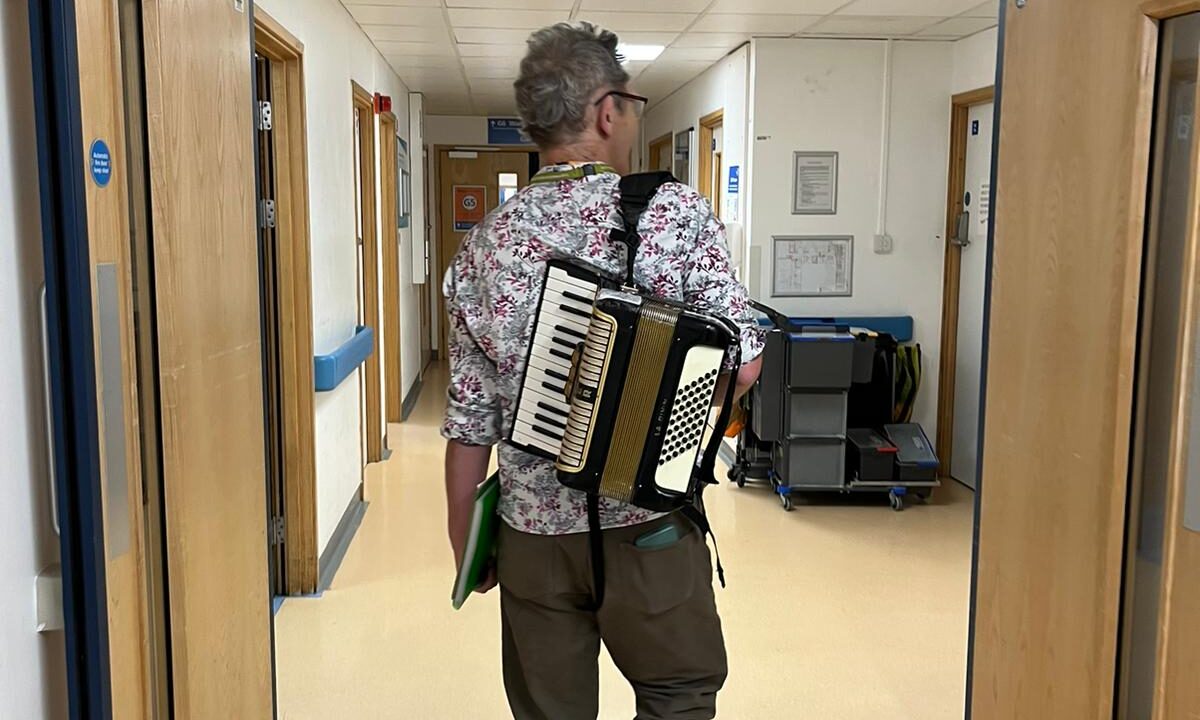
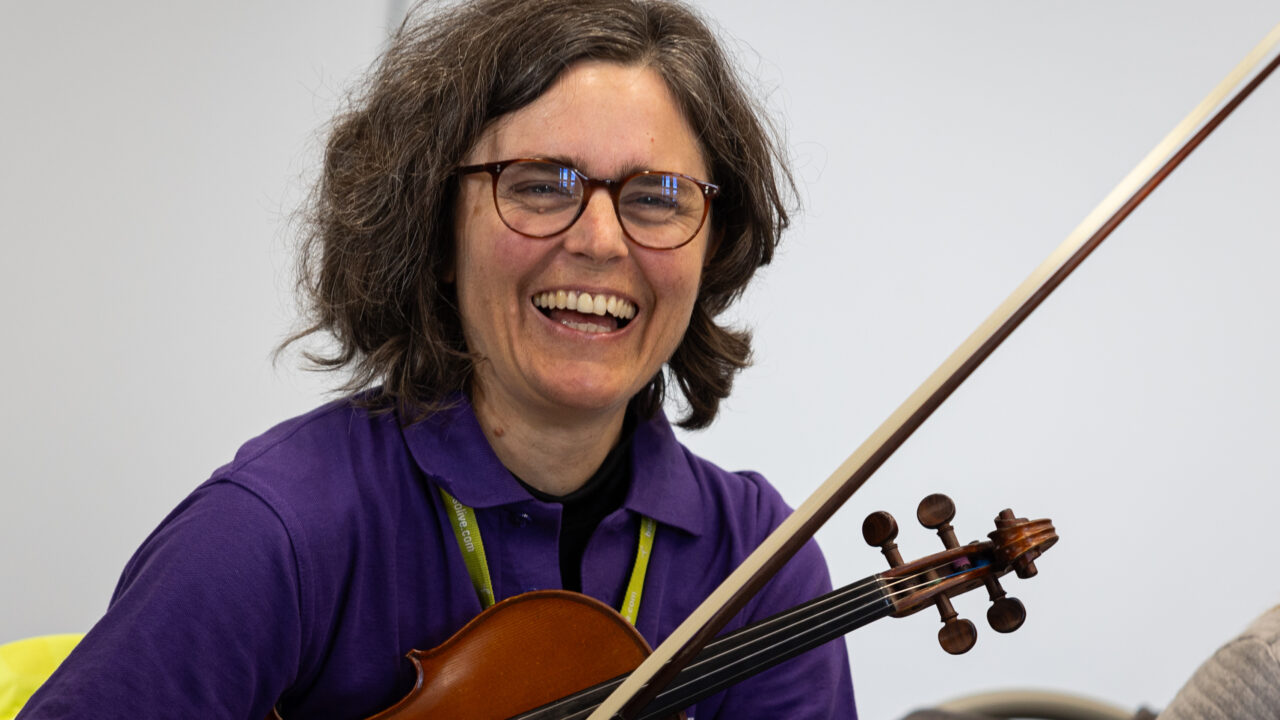
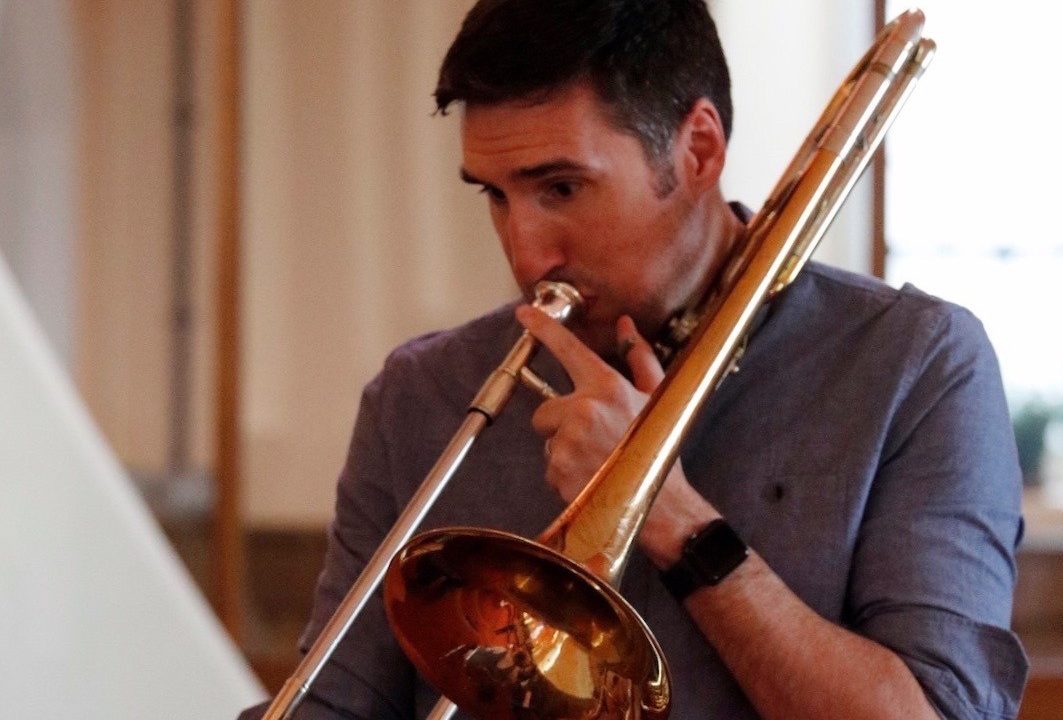
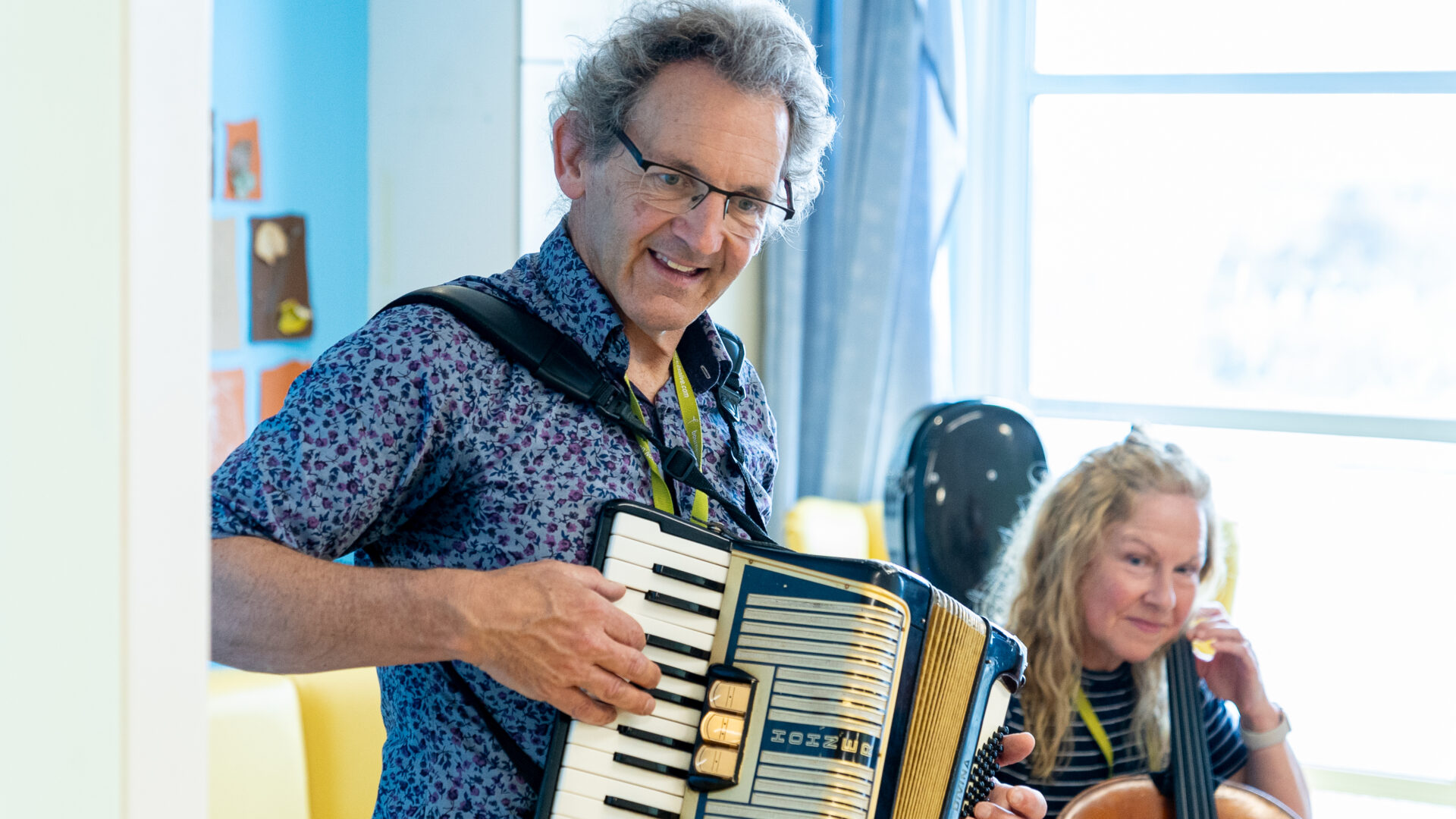
In Exeter, fellow BSO Associate Emma Welton and I spent a day with around 100 fourth year medical students as they begin their medical humanities course at University of Exeter. We give a 30-minute presentation about how the BSO is involved in health and wellbeing settings, as well as some examples of our own work with wellbeing orchestras, singing, and playing in care homes and hospitals. We then lead four small groups of 20-30 students for 90 -120 minutes, leading them in practical music-making and discussions.
Do students have to be musical to take part in the day?
They do not need to be singers or instrumentalists, but we talk with them about what music does for them, and how they use it (for relaxing, for energising, in the gym…). In that way we encourage them to think of themselves as being musically engaged, even if they are not a practising musician. A few brought along an instrument.
“I’d like accordion and violin playing to start each lecture” said one student.
What is the aim of the programme? What is hoped to be achieved by it?
To encourage medical students to think about how music can be used in a medical setting. For many of these students this is the first time they might have been made aware of the possibilities for music as an alternative or accompaniment to a medical process. Examples of this include singing in a choir instead of pulmonary rehab for Chronic Obstructive Pulmonary Disease (COPD) patients, or using music for aiding rehabilitation of stroke patients in terms of holding instruments (and singing, playing in time etc), or as an art form that can relax and ameliorate difficulties in a medical setting.
What kind of feedback have you received from students who’ve taken part in the day?
It’s been very positive generally. Two thoughts that strike me this morning are firstly: – ‘the importance of using non-verbal communication’ – which of course music can facilitate. Something else that came up was that the atmosphere was different for students arriving to the lecture with music playing than to a standard lecture (we started the lecture with accordion and violin playing). This made me realise that the students could imagine what this might do in a medical setting, how it could transform it. This student said, ‘I’d like accordion and violin playing to start each lecture.’
One member of staff, who also works as a GP in Exeter, was excited to find out about choirs benefitting COPD patients and left the day wanting to explore choirs near to her surgery.
In your opinion, what is the importance of music or the arts within a medical setting?
Music can radically affect a particular setting. It can relax someone who is having a needle inserted; it can inspire a non-verbal person to participate; it can take people away however temporarily from their pain; it can bring families together, and much more.
The University and Orchestra share a vision to create a fairer, socially just and inclusive society – and, last year, marked the 10th anniversary of a strategic partnership that has seen a commitment to creative opportunities in and around Devon, with particular focus on access and inclusion and health and wellbeing.
To find out more about the work of BSO Participate click here. Learn more about the partnership between the University of Exeter and the BSO here
Gallery