
Thomas Adès 1971 - Present
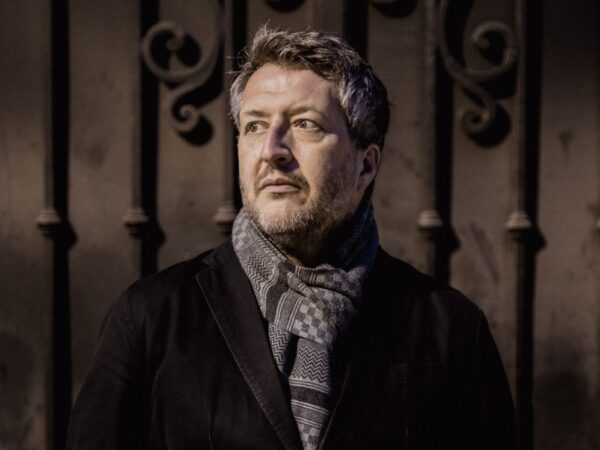
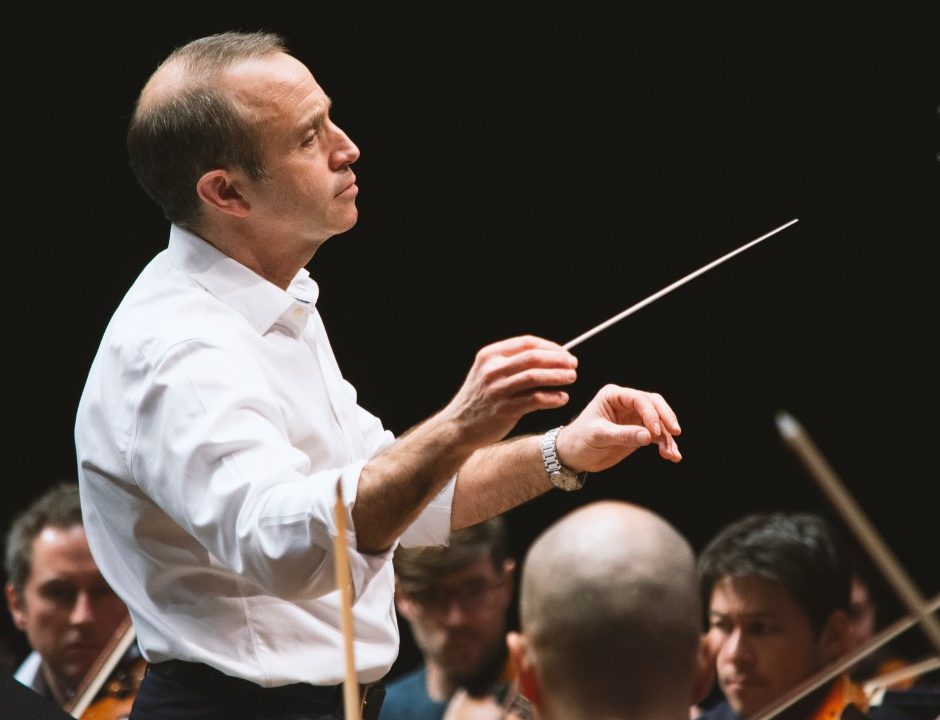
By the age of thirty, Thomas Adès had established himself as a composer of international stature: two and a half decades later he’s indisputably one the greatest living composers. Adès is this season’s BSO Celebrated Composer, with the orchestra performing four of his works, one from early in his career, a suite from his opera, Powder Her Face (1995), and three more recent pieces, Märchentänze (2020-21), Dawn (2020) and Air –Homage to Sibelius (2021-22). An added bonus is that Adès conducts the BSO next May with a programme including the latter work. In the words of BBC Radio 3 presenter, Gillian Moore, look forward to ‘startingly, utterly original music’.
Born in 1971, during his teens Adès studied composition at the Junior Guildhall School of Music, and when eighteen, as a pianist, won second prize in the BBC Young Musician of the Year competition. He was also a percussionist in the National Youth Orchestra. From 1989 to 1992 he read music at King’s College, Cambridge, where his composition teachers were Alexander Goehr and Robin Holloway. He graduated with a double starred First degree.
As a composer, he came to attention when his Chamber Symphony (1990) was taken up by the BBC Philharmonic Orchestra. Thereafter his progress and reputation was rapid with commissions or residencies from the Hallé, London Sinfonietta and the City of Birmingham Symphony Orchestra. He became Music Director of the Birmingham Contemporary Music Group in 1998, and the next year was appointed Artistic Director of the Aldeburgh Festival, a post he held for a decade. He’s been recipient of many prestigious prizes, for instance the Grawemeyer Award, Léonie Sonning Music Prize and the Gold Medal of the Royal Philharmonic Society. He was appointed CBE in 2018.
During his teens and twenties, Adès had a reputation as a ‘wunderkind’, with comparisons made to Benjamin Britten who, like him, excelled as composer, conductor and pianist. The work that put him firmly on the map as a significant composer was his chamber opera, Powder Her Face; he was a mere 24. This was followed by the orchestral Asyla (1997) for Simon Rattle and the CBSO, and America: A Prophecy (1999), commissioned by the New York Philharmonic Orchestra. As the late Professor Arnold Whittall observed, Adès works of his twenties, ’showed exceptional assurance of style and technique from the beginning and his success had much to do with the unmistakable presence of a personal accent in music which blends vividness of detail with a clear sense of compelling overall design.’
Adès’ second opera, The Tempest (2003), based on Shakespeare, was premiered by the Royal Opera in 2004. To that decade also belong his Violin Concerto ‘Concentric Paths’ (2005), premiered by Anthony Marwood, Tevot (2007), commissioned by the Berlin Philharmonic and Rattle, and Lieux retrovés (2009) for cello and piano.
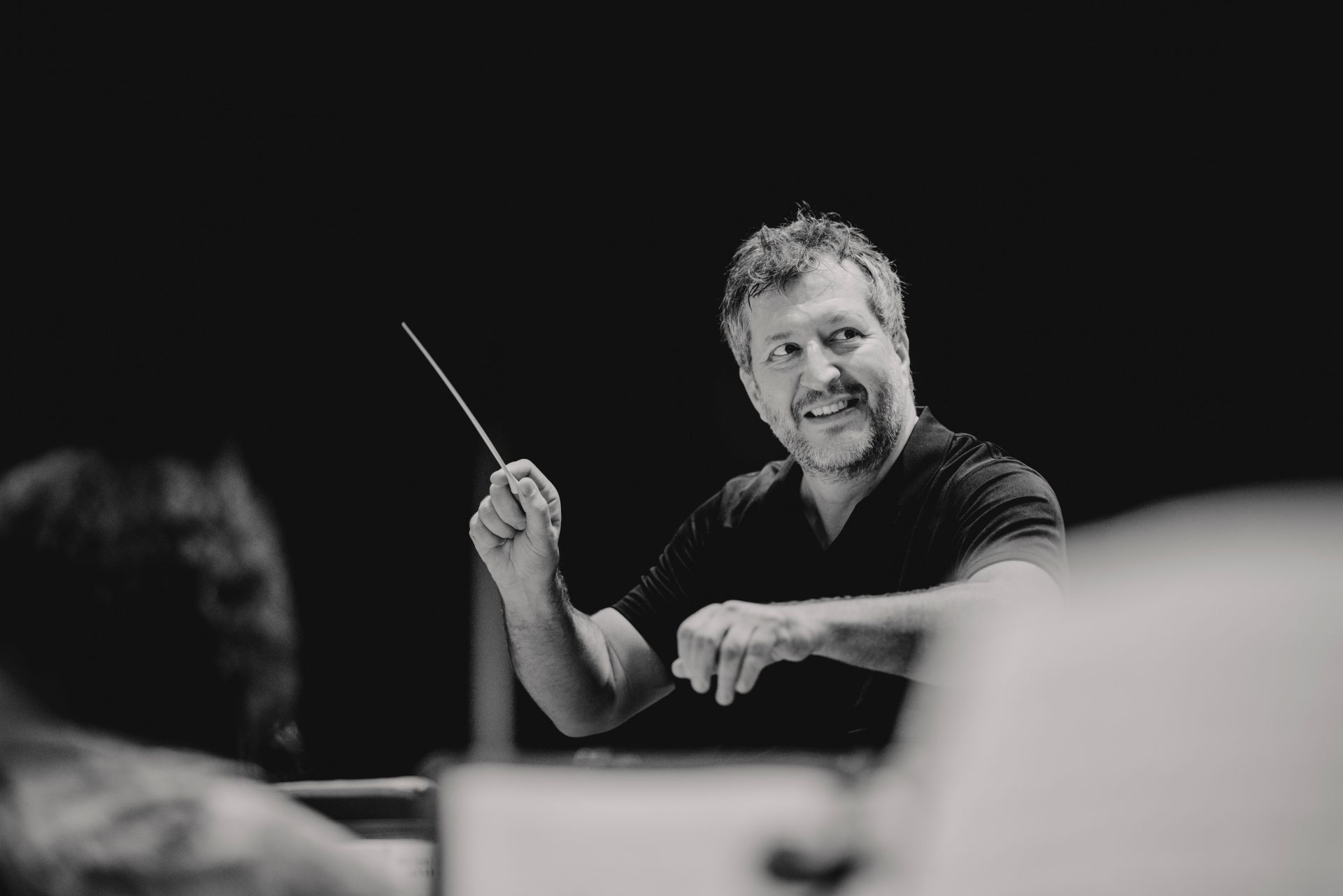
The Exterminating Angel (2015 -16), Adès’ third opera, is based on the surrealist film by Lewis Buñuel, and was first performed at the Salzburg Festival in 2016. Its UK premiere followed a year later at the Royal Opera House, Covent Garden. Other notable works composed during that decade include Totentanz for baritone, mezzo-soprano and orchestra (2013) premiered at the Proms, Piano Concerto (2018), for Kirill Gerstein when Artistic Partner with the Boston Symphony Orchestra, and his full-length ballet, Dante (2019-20), choreographed by Wayne Macgregor. It was first staged complete in 2021 by the Royal Ballet at the Royal Opera House with Adès conducting.
Since then Adès has composed two large-scale orchestral works, Aquifer (2004), for Rattle and the Bavarian Radio Symphony Orchestra, and an expanded version of America: A Prophecy, for the Leipzig Gewandhaus, during a two-year focus on his music. As from September this year, Adès was appointed Principal Guest Conductor of the Hallè, his first formal conducting position. Next year, together with Kirill Gerstein and the Bavarian Radio Symphony Orchestra, Adès will give the premiere of Abendlieder for piano four hands and chorus.
Adès’ music is elusive to pin down, since it often emerges from a wide range, of not so much influences, but references to composers to whose music he transforms through his own contemporary lenses. These range from Couperin, Beethoven, Chopin, Liszt and Tchaikovsky, to Stravinsky, Ligeti, and Kagel. Sometimes actual quoting from other composers can be fertile territory for him, which is often executed with a sly playfulness. Popular music also find its way into Adès’ works, tango, for instance, in Powder Her Face and techno music in Asyla. These wide-ranging sources of inspiration invariably results in each of his works having an unmistakable personality of their own. A further characteristic is his phenomenal flair for instrumental colour, be it for chamber works or the palette of a large orchestra. For insight into Adès’ craft, an excellent starting point is Thomas Adès: Full of Noises: Conversations with Tom Service, published by Faber & Faber.
This year’s BBC Proms featured two thirds of Adès’ Dante ballet score, Part 2: Purgatorio, with the composer conducting the National Youth Orchestra, and three days later, Dudamel conducted Part 1: Inferno with the Los Angeles Philharmonic Orchestra. The roar of approbation that greeted Adès as he walked onto the platform at both concerts spoke volumes, reflecting how his compelling, vibrant music manifestly connects with audiences across the globe.